

YOUR HOME SOLD GUARANTEED OR WE'LL BUY IT!*





May 2026: Canadian Housing Market Shows Early Signs of Stabilization Amid Uneven Recovery
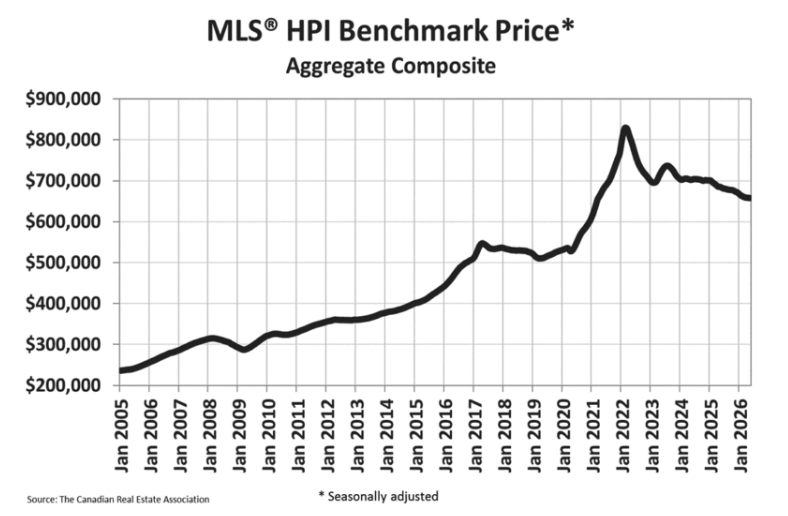
The Canadian housing market showed a gradual but uneven rebound in May 2026, with national home sales rising 5.5% month over month, though still about 5% below year-ago levels. Gains were disproportionately driven by activity in Ontario, suggesting regional strength rather than a fully broad-based national surge. At the same time, new listings edged down about 1%, helping improve the balance between supply and demand. The sales-to-new-listings ratio tightened to just under 50%, indicating conditions are moving closer to a balanced market but not yet firmly in seller-favored territory.
Prices largely stabilized after earlier softness in the year. The MLS Home Price Index slipped only 0.1% month over month, while still showing a roughly 4% year-over-year decline, though this marked the smallest annual drop so far in 2026. The national average home price rose about 1.5% year over year to roughly $702,000, reaching its highest level in two years. These trends, along with shorter listing times and firmer sale-to-list price ratios, suggest that pricing pressure is easing and market expectations between buyers and sellers are becoming more aligned.
Supply conditions remained steady, with total active listings holding near 200,000 and inventory sitting at about 4.8 months—close to long-term averages and consistent with a balanced market. However, regional divergence persisted, with price declines in British Columbia, Alberta, and Ontario offsetting gains elsewhere. Overall, the data points to a housing market that is no longer weakening broadly but instead transitioning into a more stable phase, characterized by gradual demand recovery, regional variation, and early signs of equilibrium rather than strong expansion.