

YOUR HOME SOLD GUARANTEED OR WE'LL BUY IT!*





The Long Road to Stable Prices and Lower Inflation
For several years, the rising cost of living has been one of the biggest concerns among Canadians, with food and housing costs consistently ranking as top priorities. Politicians across the country have promised to address affordability, while recent polling shows that 65 per cent of Canadians continue to identify the cost of living as their leading concern. Although it may take years for affordability to fall down the list of priorities, the foundation for more stable long-term inflation is beginning to take shape.
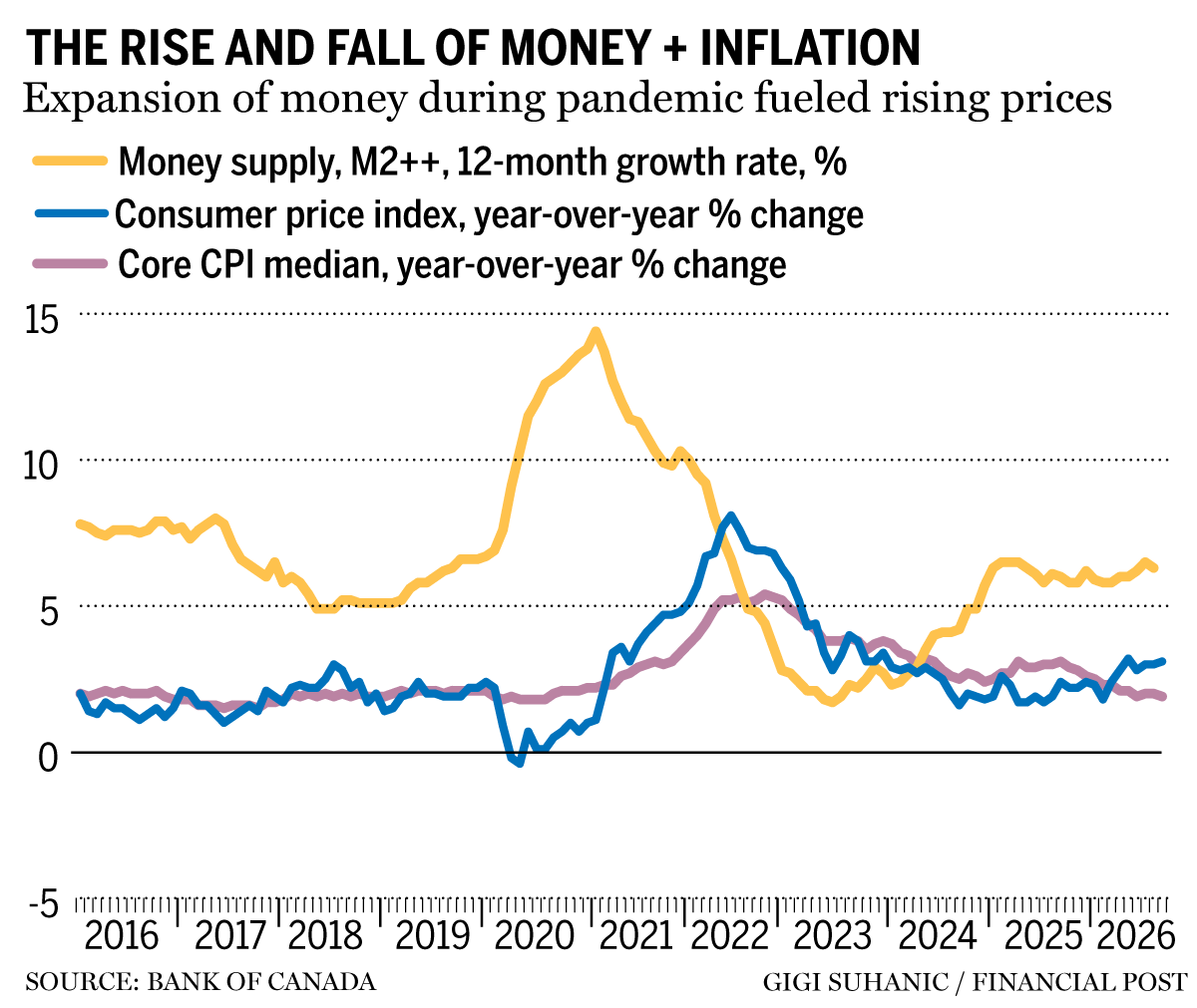
The Bank of Canada has maintained its focus on controlling inflation, with its recent decision to raise the overnight interest rate by 0.25 percentage points, from 2.25 to 2.5 per cent, reinforcing its commitment to keeping inflation within its target range of 1 to 3 per cent. While economists disagree on whether the increase was necessary, the bank's broader strategy has helped bring inflation down significantly. The Consumer Price Index has fallen from its post-pandemic peak of 8.1 per cent to 3.1 per cent, while a key measure of core inflation has declined from 6.1 to 2.5 per cent.
During the pandemic, historically low interest rates and large-scale purchases of financial securities dramatically increased the money supply. Combined with additional lending from major banks, these measures injected substantial amounts of money into the economy. As a result, the money supply grew rapidly, reaching an annual growth rate of more than 14 per cent in 2022, contributing to the sharp rise in inflation. Inflation began to ease only after interest rates increased in 2022 and monetary growth slowed. However, the higher prices established during that period have become embedded in the economy and continue to affect Canadians' cost of living.
Looking ahead, the priority must be preventing another significant increase in inflation and maintaining price stability. Government interventions aimed at improving affordability may offer temporary relief, but they cannot reverse the inflation already built into existing price levels. Instead, maintaining control over inflation and the money supply will be essential to protecting Canadians' purchasing power. Recent economic research has also renewed interest in monetarism, the theory that changes in the money supply play a significant role in driving inflation, particularly following the dramatic increases experienced during the pandemic.
By most indicators, the Bank of Canada has returned to a steady focus on long-term inflation control, with core inflation approaching its target range and money supply growth returning to more normal levels. There is growing discussion among economists and central bankers about placing greater emphasis on money supply when developing monetary policy. While it remains to be seen whether this approach will become a larger part of Canada's future strategy, the pandemic has reinforced the importance of managing monetary growth to prevent another prolonged period of rising prices.