

YOUR HOME SOLD GUARANTEED OR WE'LL BUY IT!*





Canada’s Housing Market Takes Different Paths
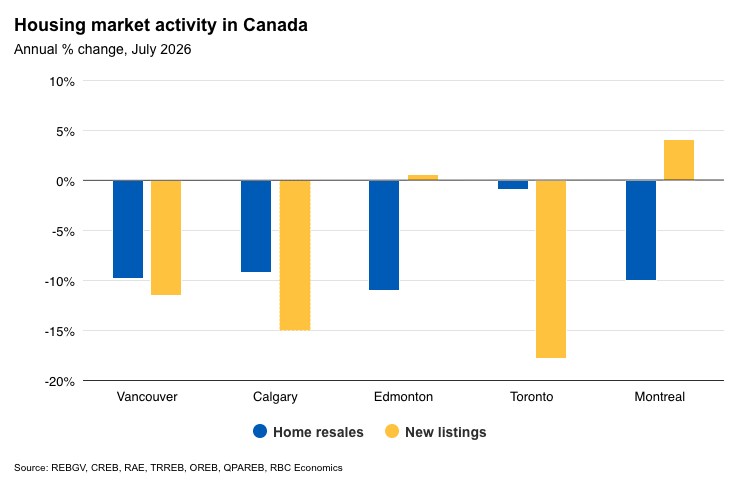
Canada’s housing markets showed a mix of recovery, setbacks and stabilization in July, with conditions varying significantly across the country. Some markets showed signs of recovery or turnaround, while others continued to struggle with affordability, weak demand and elevated inventory. Home values remained below year-ago levels in several major markets, while others continued to see modest price growth or stabilization.
The Toronto area showed encouraging signs of recovery, recording its longest stretch of monthly resale gains in three years and a second consecutive monthly increase in benchmark prices. However, the market remains well below pre-pandemic activity, with prices still down from a year ago. The condo segment continues to face particular pressure, although declining new listings and a gradual reduction in inventory suggest the recent price gains could be sustained in some areas.
Montreal appears to be heading toward a controlled slowdown rather than a sharp decline. Home sales remain below last year’s levels, while price growth continues to moderate amid affordability challenges and slower population growth. Supply has increased, particularly for condos, helping bring the market closer to balance and easing upward pressure on prices.
Vancouver’s housing market continues to face significant challenges, with July bringing another decline in home resales and prices falling further from a year ago. Affordability concerns, weak buyer confidence, abundant inventory and slower population growth are keeping demand subdued, and further price declines may be needed before buyers return in greater numbers.
In Calgary, tighter supply is becoming a defining feature of the market as sellers remain hesitant to list their homes. Sales have softened, while prices continue to decline at a slower pace than earlier in the year. Condos remain the weakest segment, but overall conditions point to a cooling market where limited inventory could make it more difficult for buyers to find suitable properties.